Two seafarers (Left and Centre) saved off the Atlantic Ocean, some 2400km west of Cape Town on the border with Uruguay, on board a crude oil tanker, the FRONT POLLUX after it had pulled them off the sea. They arrived safely in Cape Town on Monday, according to South African Maritime Safety Authority (SAMSA) (Photo: Supplied)
Pretoria: 19 March 2024
Two seafarers evacuated from a life raft at sea on Thursday this past week after their small vessel sank in the Atlantic Ocean some 2400km west of Cape Town reportedly during the early hours of that morning, safely arrived in the Mother City on Monday, according to the South African Maritime Safety Authority (SAMSA).
SAMSA said the pair, reportedly a Swiss/USA and Brazilian citizens, both in relatively good health, were disembarked in Cape Town just after lunch on Monday, having arrived on board a crude oil tanker, the FRONT POLLUX; that pluck them off the sea last week.
Sadly, a third seafarer also onboard the Switzerland registered sailing vessel NINA POPE the group were sailing in, reportedly passed away and he went down along with the vessel when it reportedly sank in an ocean location in the Atlantic, approximately 2400km west of Cape Town on Thursday.
SAMSA, through the Maritime Rescue Coordinating Centre (MRCC) based at the SAMSA Centre for Sea Watch & Response in Cape Town, earlier reported that the group of seafarers’ problems with their craft – a vessel measuring about 16m in length and about five (5) meters wide – surfaced through the Garmin International Rescue Coordination Centre (IERCC) notification of an SOS Alert from one of the crew of the NINA POPE that had been received.
Shortly thereafter, a Distress notification from a Cospas-Sarsat Emergency Position Radio Beacon (EPIRB) activation was relayed by the South African Mission Coordination Centre (ASMCC) for Cospas-Sarsat, based at Telkom Maritime Radio Services in Milnerton, Cape Town.
“Due to the incident position being close to the Search and Rescue Region border of Uruguay and South Africa, it was agreed that MRCC Cape Town shall assume Search and Rescue (SAR) coordination. MRCC Uruguay continued to assist MRCC Cape Town with supplementary SAR related information.
“Thanks to the continuous position updates received from both the Garmin device and the EPIRB, MRCC Cape Town was able to direct the MT FRONT POLLUX to the distress position through the communication assistance of Telkom Maritime Radio.
By 3pm (South African local time on Thursday) the MT FRONT POLLUX reported to have sighted a life raft in the vicinity of the distress position and proceeded to recover the survivors in winds of up to 74 km/h and sea swell of up to eight (8) meters.
“The FRONT POLLUX notified MRCC Cape Town that only two survivors (male) were recovered from the life raft and that the third, the skipper (male), had not survived and went under with the NINA POPE when it sank,” said MRCC.
In Cape Town on Monday, the two seafarers were welcomed and taken care of by the National Sea Rescue Institute (NSRI) which had been called upon to assist, said SAMSA.
“The two survivors were safely disembarked by the NSRI Table Bay unit from the M/T FRONT POLLUX and transported to back to the NSRI base. The seafarers are sorting out paperwork with the respective embassies,” said SAMSA.
A search for a foreign seafarer who reportedly fell overboard a container vessel in the Indian Ocean, about 22 nautical miles southeast of Cape Recife near the city of Gqeberha, in the Eastern Cape province at the weekend, has been called off after a thorough situation appraisal; the South African Maritime Safety Authority (SAMSA) confirmed on Monday.
The seafarer, reportedly a male in his 30s, was not found, said SAMSA, adding that at the time of his disappearance overboard a Denmark flagged container ship, MV Santa Cruz, he was reportedly not wearing a life jacket.
The search for the seafarer, according to SAMSA ensued on Saturday evening shortly after a distress call was received from the vessel, reporting about the incident, and requesting assistance through both the Telkom Maritime Radio and the Maritime Rescue Coordination Centre based in Cape Town.
At the time of incident on Saturday evening, the vessel was sailing at approximately 22 nautical miles east of Cape Recife, near Algoa Bay in the Eastern Cape province.
“At 18h42 (local time) on Saturday, Telkom Maritime Radio informed the Maritime Rescue Coordination Centre (MRCC) that M/V Santa Cruz reported that she had a man overboard.
“MRCC and Telkom Maritime Radio has since issued a call to vessels in the vicinity, the closest of which was a fishing vessel, FV Portunity, to assist with the search while more search and rescue resources were currently being mobilised, inclusive of the National Sea Rescue Institute (NSRI),” said SAMSA.
Overnight, the containership which was enroute from Durban to Cape Town continued the search and was later joined by as many as six (6) other vessels, as well as by the National Sea Rescue Institute (NSRI) in (Gqeberha), however sadly, all to no avail, confirmed SAMSA.
The vessel is bound for Cape Town and the local SAMSA office will board the vessel for further investigation.
Development of South Africa Maritime Sector Decarbonisation Roadmap is now well on track following to an inaugural roundtable meeting of the sectors’ key role players, led by the Department of Transport (DoT) and the South African Maritime Authority (SAMSA); in Newlands, Cape Town, a week ago.
According to SAMSA, the Ministerial roundtable on development of a Maritime Sector Decarbonisation Roadmap is South Africa’s latest tacit response and contribution towards pursuit for fulfilment of its commitment to implementation of the International Maritime Organisation (IMO) 2023 Strategy on Reduction of GHG Emissions from Ships.
The revised IMO GHG Strategy, according to SAMSA, includes an enhanced common ambition to reach net-zero GHG emissions from international shipping by or around 2050, a commitment to ensure an uptake of alternative zero and near-zero GHG fuels by 2030, as well as indicative checkpoints for 2030 and 2040.
Among other factors, ‘indicative checkpoints’ to reach net-zero GHG emissions from international shipping include strife for reduction of total annual GHG emissions from international shipping by at least 20%, striving for 30%, by 2030, compared to 2008; and reduction of total annual GHG emissions from international shipping by at least 70%, striving for 80%, by 2040, compared to 2008.
South Africa as a member of the IMO, said SAMSA, has a responsibility to progress the decisions of the organisation, with SAMSA expected to lead the implementation of such decisions, in line with objective 3 of the SAMSA Act.
There had now developed concerns, however, that “with the adoption of the revised 2023 IMO GHG Strategy, South Africa is still to develop its own roadmap on achieving the vision and targets aimed at decarbonising shipping.
“To advance the objectives of the GHG strategy and implementation of the developed IMO regulations aimed at decarbonising shipping, South Africa is still to finalise the legislative instrument to give effect to Annexure VI (Energy Efficiency of Ships) of the MARPOL Convention.”
Thus, according to SAMSA, the roundtable discussion on Friday last week was aimed at initiating a crafting phase of South Africa’s maritime approach and alignment to climate change programmes for purposes of GHG emissions reduction as contained in the IMO strategy.
Precisely, said SAMSA, the focus was on various issues, inclusive of an assessment of the country’s strategic approach to the subject relative to its geographic location, the country’s potential to produce clean fuels based on its renewable energy resources, the identification of possible green corridors, possible best approaches to leveraging economic opportunities such as clean fuels bunkering – over and above reduction of domestic emissions – and the potential impact of the entire exercise on the country’s economy inclusive of trade.
At last week’s roundtable meeting, in response to the Minister of Transport, Ms Sindisiwe Chikunga’s call for action, in addition to SAMSA senior management as well as the entity’s Board chairperson, Mr Mahesh Fakir, participation included representatives of the IMO (World Maritime University), South Africa ship owners and operators, the country’s ports authority (Transnet National Ports Authority), mining, environmental, energy, education and training, and related industry associated experts.
Also attending was about a dozen of about 30 officials from various South African public institutions and private maritime sector companies who’d earlier in the week, spent four (4) days in Cape Town on an executive professional development training course on Maritime Energy Management and Decarbonisation conducted by the World Maritime University.
The lineup of speakers and contributors to the discussion, included DoT Deputy Director, Maritime Branch; Mr Mthunzi Madiya (officially representing the Minister of Transport), SAMSA Board Chairperson Mr Mahesh Fakir, SAMSA Acting CEO and COO, Mr Tau Morwe and Mr Sobantu Tilayi, respectively; Mr Mkhuthazi Teleki (Department of Forestry Fisheries and Environment), Mr Tauqeer Ahmed (TNPA), Mr Andrew Millard (Vuka Marine), Mr Dan Ngakane (African Marine Solutions), Mr Sanda Zungu (Phalaborwa Mining Company), Dr Ita Mabaso (PetroSA), and Mr Johannes Bochdalofsky, co-founder and CEO of SeaH4.
At the conclusion of the discussion, SAMSA Chief Operations Officer, Mr Sobantu Tilayi summed up the day as having been ‘most productive, with great progress.” For his full remarks, click on the video below.
SAMSA Chief Operations Officer, Mr Sobantu Tilayi on the outcomes of the Ministerial maritime sector decarbonisation roadmap development roundtable held in Cape Town
For SAMSA ACEO, Mr Tau Morwe’s introductory remarks, click on the video below.
For the Minister, Ms Chikunga’s key opening address (presented by Mr Madiya), click on the video below.
For SAMSA Board chairperson, Mr Mahesh Fakir’s concluding remarks.
Additionally, for further insights into the four (4) day workshop held earlier in the week preceding the roundtable discussions, conducted by the World Maritime University, this blog chatted briefly, separately, with both SAMSA’s Acting Chief Human Capital Officer, Mr Tebogo Mojafi, and one of the course conductors, Professor Dr. Aykut I. Ölçer.
For their respective remarks, click on the videos below.
One of depictive photos of the Vaal River incident on Saturday, 21 October 2023, and which claimed the lives of four (4) people including a young child. (Photo Supplied)
Pretoria: 23 October 2023
The South African Maritime Safety Authority (SAMSA) has confirmed its launch of an investigation into the tragic boat incident at the Vaal River which claimed at least four (4) lives, including that of a toddler.
In a statement in Pretoria on Monday, SAMSA reported that according to a police report, the boating incident occurred at about 16h00 on Saturday when two small vessels, a boat with 10 people on board, and a barge; sailed past each other, and with one, due to its size, reportedly creating a large wake and the resulting waves leading to the other capsizing, and the people on board landing in the water.
“The vessel had reportedly launched at the SAM GROSS municipal site on the Vaal River with 10 persons onboard including the skipper. The vessel was reportedly cruising in the direction towards Vereeniging area when it came across a moving barge in the opposite direction.
“However, according to the report, it was assumed that the barge, due to its size, created a large wake and the resulting waves flooded the speed boat, leading to the speed boat being submerged and eventually capsizing.
“Regrettably, a woman/mother and her three (3) year toddler were trapped under neath the speed boat in the capsized position and drowned. Both were reportedly wearing personal flotation devices.
“The report further indicates that two (2) adults, also fitted with personal floatation devices drowned further away from the capsized speed boat. However, the skipper and other five persons survived the incident.
“According to the report, the SAPS Water wing arrived on scene at about 17:30 and assisted in retrieving all the deceased from the river, as well as all the survivors, within twenty minutes of the incident occurring. Paramedics were reportedly also on the scene and attended to the survivors. An investigation into this incident is ongoingm; “said SAMSA
Meanwhile, SAMSA conveyed its condolences to the family of the deceased.
After a long delay occasioned by the devastating outbreak of the global Covid-19 pandemic in December 2019 that led to intermittent national shutdowns for over two years, the rollout of a public awareness campaign about South Africa’s national oil spill contingency plan (NOSCP) is finally underway, with the two Indian Ocean commercial ports of Gqeberha, Eastern Cape province being the first to host the rollout.
Conducted by the South Africa Interim Incident Management Organisation (IMorg) the NOSCP roadshow kicked off at the port of Gqurha, in Algoa Bay near Gqeberha (a.k.a Port Elizabeth) on Tuesday and continued on Wednesday.
Attended by more than 80 people on Tuesday, including representatives of key role players such as the Department of Transport (DoT), South African Maritime Safety Authority (SAMSA), Department of Forestry, Fisheries and Environment (DFFE), the Transnet National Ports Authority (TNPA), environmental organisations and related, according to IMorg, the purpose of the roadshows is to inform and enhance public awareness about the revised NOSCP for the 2019-2024 period, and attendant response strategies to oil spills and related incidents at South Africa’s oceans.
The IMOrg, a virtual organisation chaired by the DoT and SAMSA as the co-chair and secretariat, is South Africa’s preparedness forum for joint Government and ndustry response to oil spills within South Africa’s exclusive economic zone (EEZ) of approximately 1.5-million km² across the Atlantic, Southern and Indian Oceans.
Launched in 2017, as a deliverable of the Operation Phakisa Oil and Gas laboratory B1 initiative, for joint Government – industry emergency drills, IMOrg’s membership is drawn broadly from across various sectors of society inclusive of State departments, private sector industries as well as non-governmental institutions.
Capt. Ravi Naicker. SAMSA Centre for Sea Watch & Response and IMOrg senior official
According to Capt. Ravi Naicker of the SAMSA Centre for Sea Watch and Response, and the entity’s main representative in IMorg, the DoT has a legal responsibility of providing and fulfilling South Africa’s statutory obligations towards marine pollution prevention response along the country’s coastline of more than 3 000 kilometres. This in terms of powers provided in the Marine Pollution (Control and Civil Liability) Act 6 of 1981, Marine Pollution (Prevention of Pollution from Ships) Act 2 of 1986 and in the Marine Pollution (Intervention) Act 64 of 1987.
“These Acts impose obligations on ships and installations and further give power in respect of pollution casualties in so far as pollution occurs, or threatens to occur within waters under South African jurisdiction, being waters comprising the internal and territorial waters, the exclusive economic zone, etc.
“The International Convention for the Prevention of Pollution from Ships (MARPOL) is the main international convention covering prevention of pollution of the marine environment by ships from operational or accidental causes.
“Domestically, the Constitution (Act No. 108 of 1996: Section 24 of the Bill of Rights): provides that everyone has a right to an environment that is not harmful to their health or well-being and to have the environment protected for the benefit of the present and future generations through reasonable legislative and other measures.
“The latter section illustrates clearly that the government has a legal obligation to protect the environment through the development and the implementation of the Plan to fulfil this obligation amongst other statutory legislative measures put in place.
“These rights and obligations are embedded in the supreme law in South Africa, which is the Constitution and affords every citizen access to petition a competent court of law to hear the matter and enforce their rights or perceived violations.
“Furthermore, the 2017 version of the South African Comprehensive Maritime Transport Policy makes provision for the DoT, in co-operation with other Departments and agencies, to maintain a comprehensive Contingency Plan to ensure compliance with the provisions of the International Convention on Oil Pollution Preparedness, Response and Co-operation, 1990 (OPRC),” he says.
On what the revised NOSCP now entails and why it is important to enhance public awareness about its provisions, Capt. Naicker says the implementation framework is critical for broad public knowledge and understanding.
The framework, he says, outlines a range of issues including the role and responsibilities of the persons and parties involved in a national response to a marine oil spill in South Africa, relevant information and recommended procedures on appropriate action in the event of an oil spill, arrangements allowing for a rapid and co-operative response to marine oil spills within defined areas, and processes related to the provision of national and international support.
“The NOSCP recognizes that no two incidents are ever the same and therefore the level and intensity of a response varies from incident to incident. The plan is complemented by Government and Industry contingency plans prepared at regional, port and facility levels. Matters of detail are contained in local, site specific, contingency plans,” he says.
A most critical aspect of the NOSCP, according to Capt. Naicker, is the adoption, introduction, and application in South Africa of the International Maritime Organisation (IMO) endorsed Incident Management System (IMS) and about which, he says; offers “..a well-structured and inclusively accepted offshore oil spill response management system.’
The IMS scope covers incidents management aspects including the setting up of command structures, planning, operations, logistics and finance arrangement. Broken down into two categories, the IMS consists of three modules – IMS 100, 200 and 300 – involving desktop training of participants, and practical on-the-field real time incident management training in simulated oil spill exercises at sea.
To date, more than 50 people have undertaken the training, conducted variously by international experts including the Global Initiative for West, Central and Southern African (GI-WACAF) Project, International Petroleum Industry Environmental Conservation Association (IPIECA).
On why the IMorg’s NOSCP roadshow started in the Algoa Bay ports of Ngqurha and Port Elizabeth, Capt. Naicker says this was based on IMOrg’s recommendations that environmentally highly sensitive ports be prioritised, a stance fully supported by especially environmental groups such as the Southern African Foundation for the Conservation of Coastal Birds (SANCCOB).
The Algoa Bay’s high risk profile for oil spill contingency plans is based both on the existence and operations of two major commercial ports and a ship-to-ship bunkering operation in the area and alongside which are a diverse wildlife including bird colonies.
For this blog’s brief chat with Capt. Naicker, click on the video below.
For a brief chat with SANCCOB’s representative at the Ngqurha port leg of the roadshow, Ms Monica Stassen click below.
For a brief chat with DFFE & IMOrg official, Ms Feroza Albertus.
Efforts were undertaken over the weekend to initiate the recovery of a fishing vessel that ran aground off the Cape coast near Mossel Bay last week. These efforts were preceded by actions to prevent any potential oil spillage from polluting the sea area, as confirmed by the South African Maritime Safety Authority (SAMSA) on Sunday.
The salvage operation, led by diverse teams including disaster management experts from the Garden Route region, commenced shortly after successfully locating a crew member who had gone missing during the vessel’s mishap.
The vessel named DIJAANDA, had struck rocks and capsized while engaged in a fishing expedition at sea along the Cape coastline to the south of Mossel Bay on a Wednesday morning. Out of the seven crew members, five (5) tragically lost their lives, and two (2) managed to survive the ordeal, according to a SAMSA’s statement.
SAMSA also reported that prior to commencing the recovery efforts on the distressed fishing boat over the weekend, a thorough examination of the sea area was conducted to identify any potential oil contamination. Fortunately, no signs of an oil spill were detected during this inspection.
Despite the vessel being grounded with a noticeable large hole on one side, it appeared to have contained minimal oil onboard. However, authorities will maintain ongoing vigilance to ensure that any contamination risks are minimized or proactively controlled.
In light of the unfortunate loss of crew members’ lives, SAMSA conveyed its heartfelt condolences to the families affected and expressed its hopes for a swift recovery for the surviving crew members following the traumatic and unfortunate incident.
Furthermore, SAMSA affirmed its commitment to continue investigating the root and underlying causes of this incident.
The South African Maritime Safety Authority (SAMSA) kickstarts its annual Corporate Social Investment & Sustainability (CSI) programme on Nelson Mandela month with an initiative aimed at contributing to drownings prevention in Gauteng.
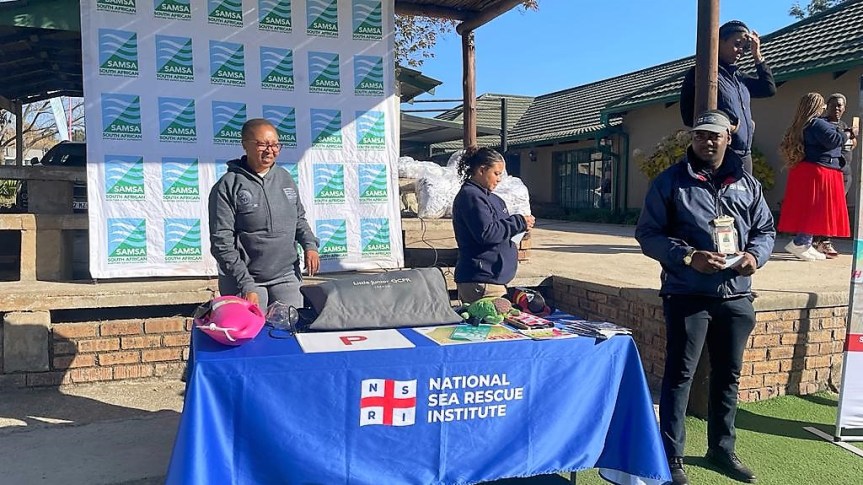
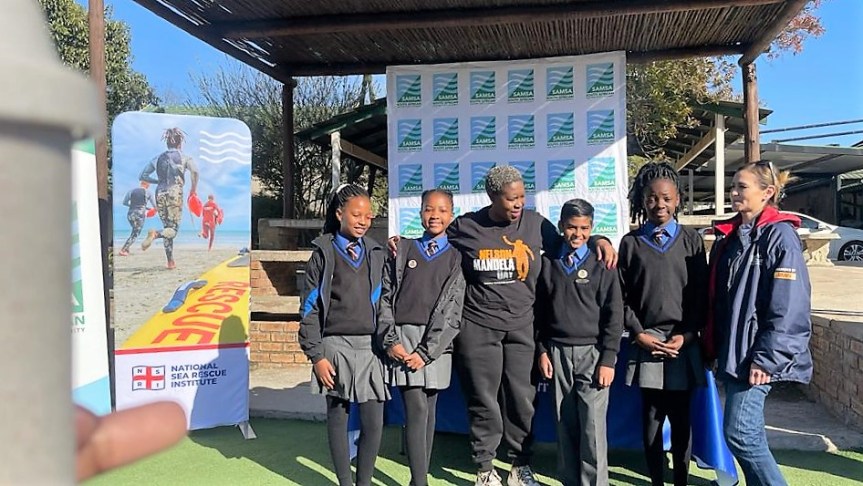
The SAMSA CSI initiative, involving mostly young people at school level, is being undertaken in partnership with the National Sea Rescue Institute (NSRI), a national organisation already engaged with the crisis since 2006.
“The target population will be school children in Gauteng where we plan to contribute to
their basic water handling skills, involving approximately 10 000 pupils from several schools located in communities across the social spectrum,” said SAMSA and the NSRI in a joint statement.
According to SAMSA, the decision by the entity to join the NSRI initiative this year is driven by its commitment to contributing annually to addressing identified socio-economic development needs of particularly the poor, deprived and marginalised. Drowning prevention was identified for this current year as but one such critical water-based crisis in South Africa requiring urgent attention.
According to SAMSA, a report by the World Health Organization (WHO) published in 2021 indicates that on average, 236 000 people deaths occur every year due to drowning.
Closer home, according to the National Library of Medicine (National Centre for Biotechnology Information), said SAMSA; South Africa is globally listed in the top 45 countries with a drowning rate of 4.06 per 100,000 population, or an average 1477 drownings per year, of which fatal drownings accounted for a rate of 2.54 per 100,000 population from 2016 to 2021
The National Library of Medicine states that: “…drowning is a serious public health concern with low-and-middle-income countries [being] the most affected by drowning, as they carry 90% of the global drowning burden.”
Furthermore, drowning is reported to be one of the leading causes of death among mostly people aged 1–24 years, thus denoting the population group that seems more vulnerable. Dr Jill Fortuin, Executive Director of Drowning Prevention Services at the NSRI states that since the inception of the NGO’s water safety programme in 2006 the organization has reached four (4) million children through the project.
“We are delighted as the NSRI that organizations such as the South African Maritime Safety Authority (SAMSA) are collaborating with us to reach more people, specifically under 14’s through this programme,” she states.
In response, said SAMSA; “From a SAMSA perspective, it is a laudable achievement, but one that requires more support, hence our involvement this year directly with the NSRI.”
According to SAMSA, its CSI focus is shaped by the organisation’s period five-year trategic Plans (2020-25) and attendant Annual Performance Plans developed to advance and maintain consistent attainment of the entity’s mandate which encompasses ensuring safety of people and property at sea, prevention and combating of pollution of the sea by ships, promotion of South Africa’s maritime interest, as well as promotion of safe boating in the country’s inland waters.
“The consistent theme in the mandate is the promotion of safety of people and the environment, be it in our three oceans, the Atlantic, Southern and Indian Oceans; or in our vast inland waterways punctuated by hundreds of small and big dams as well water-based leisure facilities along dozens of rivers
“We are trying to reduce the drowning statistics in our country, and we are delighted in such partnerships as we would like to also change lives for the better and create futures, one child at a time,” said SAMSA.
The organisation also explained what it targeted Gauteng for the drownings prevention campaign support. “According to latest available data on drownings in South Africa, Gauteng is the province with the third highest drowning incidence in South Africa after KwaZulu-Natal and the Eastern Cape, even as landlocked and being the smallest of the country’s nine provinces, and with the least number of rivers and dams compared to other provinces.
“As it were, according to the NSRI, inland locations in South Africa significantly contribute to the country’s drownings statistics. Meanwhile, it is highly significant that Gauteng just so happens to be home to the country’s highest provincial population (15.8-million 2021 estimates) inclusive of the most poor, deprived, and marginalised. It also holds the record for the highest incidence of drownings across all nine provinces in the 5-19 years age category.
Ms Mapitso Dlepu, Acting Executive Head: SAMSA Centre for Corporate Affairs and Head of SAMSA CSI
“We have joined forces with the NSRI expertise in this area and we specifically chose to run the campaign in July because this year is the 10th anniversary of Madiba’s passing, thereby making it fit with the theme of The Legacy Lives on Through You”, said SAMSA Acting Head of the Centre for Corporate Affairs, Government and International Relations, and head of SAMSA CSI.
Ms Dlepu said key outputs planned would include 10 000 persons receiving Water Safety Education Lessons, deployment of 46 Pink Rescue Buoys, provision of 460 Survival Swimming Lessons and orientation of 46 Drowning Prevention Champions
“To kick start this project we have selected Glen Austin Primary School as the first beneficiary and this school has 200 children who range from Grade 1 to Grade 7. This is the critical age in which they need to be water safe as they are the most vulnerable,” Dr Jill added.
In addition to this, in the summer season, survival swimming lessons would be taught to persons who are residing in the area in which the NSRI teaches survival swimming lessons in the Gauteng province.
A salvage operation at sea south of Cape Town has begun on Friday to recover a stricken fishing vessel that caught on fire, leading to its crew of 26 fishermen abandoning it in the early hours of the day, the South African Maritime Safety Authority (SAMSA) reported.
SAMSA said the 26 crewmen were safely brought onto dryland early on Friday following a frantic effort involving no less than three ships which had responded to a mayday call by the Maritime Rescue Coordinating Centre based in Cape Town.
According to the SAMSA Centre for Sea Watch & Response based MRCC; “MRCC Cape Town was informed by Telkom Maritime Radio at 01:00 of the FV requiring immediate assistance due to fire in the engine room. The 26 crew then abandoned ship to life raft sighting the whole fishing vessel to be ablaze,” said the MRCC.
A computer generated image of the approximate area in which the SA fishing vessel, FV OLIVIA MARIE was located when it reportedly caught on fire on Friday morning. All 26 crew on board were safely evacuated.
It added that: “A MAYDAY Relay was issued through Telkom Maritime Radio wherein vessels were requested to render immediate assistance. NSRI Stations Hout Bay and Simon’s Town were activated. The MV AQUA EXPLORE, a Bulk Carrier, and FV UMFONDINI diverted to assist. The AQUA EXPLORE, not being able to recover the survivors from the life raft, remained on-scene until the UMFONDINI arrived.
“All crew were safety transferred to the UMFONDINI with the prevailing winds reported to be South-westerly at 15 knots and a water swell of up to 2.6 metres. The AQUA EXPLORE proceeded with normal voyage.
“FV UMFONDINI was intercepted by NSRI Stations Hout Bay and Simon’s Town after which the OLIVIA MARIE crew were transferred to the NSRI Simon’s Town craft. The survivors were safely delivered to Simon’s Town and transported back to their home base at Hout Bay.
“Efforts from MV AQUA EXPLORE, FV UMFONDINI, NSRI, and Telkom Maritime Radio supported MRCC Cape Town in the successful outcome of this maritime SAR incident.
“A Navigation Warning was issued, requesting vessels to report sightings of the OLIVIA MARIE and the life raft, this being in an effort not only to warn of the possible navigation hazards, but also to assist in the recovery of these craft,” said the MRCC.
Late on Friday, SAMSA said the vessel had since been sighted by another ship, the F/V Langenberg at a point where it was some 3.5 nautical miles from the abandoned fishing vessel, in an approximate position 34 11.8 S018 19.8 E from the Coast South of Scarborough.
“The F/V Langenberg is about 3.5 nautical miles from the abandoned vessel and spotted some debris but not a lot, no smoke on the vessel. Visibility is clear. SW wind force 5 of the current Is pushing Olivia Marie to the shallow waters.”
Efforts will continue to recover the abandoned vessel.
South Africa’s Maritime Rescue Coordinating Centre (MRCC) is among recipients of this year’s Seamanship award by London based Ocean Cruising Club (OCC), in recognition of their role in the rescue of a Finnish solo sailor after he abandoned his sailing boat that sank about 500 miles south of the South African coast four months ago.
According to the OCC in an announcement, the Cape Town based MRCC, managed under the Centre for Sea Watch & Response of the South African Maritime Safety Authority (SAMSA), will receive the award jointly with Capt. Naveen Kumar Mehrotra and the crew of the DARYA GAYATRI, and Kirsten Neuschäfer who at the time was a competitor in the 2022 Golden Globe Race.
The OCC said the recipients for this year’s Seamanship Award were nominated for “the exemplary coordination of the rescue in the Southern Ocean some 500 miles off the coast of South Africa.
The entire saga ensued on 18 November 2022 after, according to the OCC, Mr Lehtinen reported that his Gaia 36 ASTERIA flooded rapidly from the stern with water up to deck level and then sank.
“Tapio Lehtinen’s boat took on water at the stern and sank within five (5) minutes. Tapio set off his EPIRB, donned his survival suit, grabbed his ditch bag, and deployed his liferaft just before his Gaia 36 ASTERIA sank.
“He was rescued from the liferaft by Kirsten Neuschäfer (who was about 100 miles away at the time of the sinking) and was transferred to a bulk carrier in 3m seas and 25kn winds,” said OCC Commodore, Simon Currin
At the time, the OCC noted that MRCC Cape Town confirmed communication with Captain Naveen Kumar Mehrotra onboard the bulk carrier M.V. Darya Gayatri, approximately 50 nm NW of Tapio’s position, diverting course at 12,5 knots and rendering assistance with an ETA (estimated time of arrival) between 0830 and 1000 UTC on November 19.
“Kirsten called the race coordinators and confirmed she picked up Tapio from the lifer aft and proceeded to transfer him to the bulk carrier. Tapio was in good health and on board the carrier M/V Darya Gayatri en route to China. Kristen resumed racing. It was a textbook rescue that resulted in swift resolution in the Southern Ocean,” said Commodore Currin
According to the OCC, the awards recipients will be presented with the honours at this year’s OCC annual dinner scheduled for Poole in the United Kingdom on 15 April 2023. For the MRCC however, the award will be presented to the team at an occasion in Cape Town later in the year.
Capt. Pretty Molefe, head of SAMSA Centre for Sea Watch & Response.
Reacting to news of the award, SAMSA’s Centre for Sea Watch & Responde head, Capt. Pretty Molefe described the announcement of the conferment as both an honour and importantly; a crucial fitting indicator of the critical role that the sea watch and response centre and the MRCC independently play in the field of ensuring the safety of life and property at sea – effectively SAMSA’s legislated mandate.
She said: “South Africa, being signatory to the International Convention on Maritime Search and Rescue adopted by the International Maritime Organization, has an obligation to respond to distress calls within its designated Search and Rescue Region (SRR). This piece of legislation is domesticated by the SASAR Act 44 of 2002, within which falls the South African Search and Rescue Organization.
“MRCC Cape Town forms a crucial part of the South African Search and Rescue (SASAR) Organization, in that, it is tasked with coordinating all maritime SAR operations within our SAR region. A sizeable +/-27.7 million square km’s of it! At the centre for Sea Watch and Response, maintaining maritime domain awareness is of extreme importance for purposes of ensuring a timely response to incidents developing at sea, including Search and Rescue.
“Joining hands so others may live…” The successful execution of this rescue perfectly epitomizes this SASAR motto. Considering the very treacherous nature of the maritime environment, one would appreciate the fact that it takes teamwork and cooperation to execute and conclude a successful rescue operation, especially upon high seas. Not forgetting seamanship, as demonstrated by skilful sailors such as Ms Kristen Neuschäfer and the crew of the DARYA.
“The MRCC is manned by a team of men and women who are not only qualified but are equally as dedicated and attentive to each call that is received, whilst maintaining the highest level of professionalism, often under stressful conditions. I commend the MRCC team for their meticulous coordination of this rescue, in cooperation with the Master of the M.V. DARYA and Ms Neuschafer, which resulted in saving a life.
“We are extremely honoured to receive this recognition and such an important award, Seamanship Award 2022, issued by the Ocean Cruising Club. This industry is not one that is short of challenges but each one strengthens us and makes us better. Ensuring safety of life and property at sea remains imperative for us at the South African Maritime Safety Authority.
Mr Jared Blouws, MRCC Chief.
The view was also shared by MRCC chief, Mr Jared Blows; whose unit operates 24 hours a day, 365 days of the year, constantly keeping a watchful eye and in constant contact, when needed, with the thousands of vessels, big and small; traversing the three oceans region surrounding South Africa.
Mr Blows further expressed his thanks and congratulations to his team at MRCC for yet another successful rescue. He went on to congratulate the other award recipients without whom this would not have been possible.
“The team at MRCC display professionalism and strive to maintain world class standards even under very challenging times.
(File Photo) Assisted by the MRCC, sailors being rescued two years ago by South Africa’s research vessel, the SA Agulhas II, off the Gough Island after their vessel, the GeoSearcher, sank in the Atlantic Ocean.
“Over its almost 20 years being hosted by SAMSA, the MRCC has been involved in numerous incident with some notable being the 2011 rescue of 33 Taiwanese sailors about 2000nm west of Cape Town following their vessel having had an onboard explosion and fire resulting in them needing to abandon the vessel , the Cape to Rio (2014) yacht race rescue incident hours after the race started in very treacherous conditions and more recently the rescue of 62 sailors after their vessel, GEOSEARCHER (2020), sank off Gough Island,” remarked Mr Blows.
Gender Based Violence (GBV) in South Africa and globally – now declared a ‘second pandemic’ – continues to draw special focus in the coming week, with Friday, 25 November 2022 marking the start of the United Nations (UN) sponsored “16 Days of No Violence Against Women and Children” worldwide.
In South Africa, according to the South African Maritime Safety Authority (SAMSA) the country’s maritime sector that is a backbone for international trade through shipping transport and related, is a critical economic sector in which thousands of people of all genders work. Yet, even as also known and acknowledged as affected by GBV, it has remained generally quiet about it.
In a statement on Tuesday in Pretoria, SAMSA said that eerie and unjustifiable silence finally gets to an end this year, come Thursday, 24 November 2022 in Cape Town, where the sector will have its inaugural GBV seminar focused specifically on GBV and related relevant sector specific efforts to fight and end it.
SAMSA, a State agency under the Department of Transport is the organiser of the event.
Ms Sindisiwe Chikunga. Deputy Minister of Transport
Leading keynote speakers lined up for the industrial sector pioneering event include Deputy Minister of Transport, Ms Sindisiwe Chikunga, World Maritime University President, Dr Cleopatra Doumbia-Henry, Ms Lena Dyring of the International Transport Workers Federation (ITF) as well as maritime academic and veteran female seafarer, Dr Momoko Kitada of the World Maritime University.
According to SAMSA, the purpose of the first-of-its-kind sector-wide seminar is to provide opportunity to the country’s maritime to lay bare publicly the challenges of GBV it is confronted with, and to also outline measures current, or planned towards its stemming and eventually eradication.
“Statistics from various studies conducted so far locally and globally paint a horrific picture of a maritime industry in South Africa and elsewhere, that is rife with deep-seated and widespread GBV and which unsurprisingly, impact negatively particularly women.
“A 2014 survey led by International Transport Workers Federation (ITF) and its partners revealed that 17% of women seafarers reported sexual harassment as an issue. The survey report further indicated that women with less power (lower rank) in the workplace were more vulnerable to sexual harassment. This was in line with previous studies done on the subject. Cases of sexual harassment continue to grow worldwide, and South Africa is no exception.
“In yet another most recent study on GBV in the maritime sector whose outcome was shared publicly at end October 2022 in Geneva, from a group of 1128 women interviewed WISTA in 78 countries including 51 in South Africa, as many 60% of the women had encountered gender-based discrimination at work, while 66% of these concurred that their male counterparts resorted to harassing and intimidating female co-workers,” says SAMSA.
The agency further says, with South Africa being a Member State of the International Maritime Organisation (IMO), the country is among eight (8) Member States tasked by a joint working group involving the International Labour Organisation (ILO) and IMO to not only identify solutions to address seafarers’ issues and the human element, but also to focus specifically on strategies and tactics aimed at addressing sexual assault and harassment in the maritime sector.
The approach is by no means divorced from this year’s national Government’s theme for the 16 Days campaign. The theme for the 16 Days of Activism Campaign for 2022 is: “Socio-Economic Rights and Empowerment to build Women’s Resilience against Gender-Based Violence and Femicide: Connect, Collaborate, Contract!”
SAMSA File Photo
SAMSA says: “Thursday’s seminar in Cape Town, therefore, will serve as a launchpad for the SAMSA Maritime GBV Programme now embedded in its five (5) year Strategic and Annual Performance Plan for 2022-25, to effectively raise awareness and promote the mainstreaming of GBV issues within the maritime industry. Stakeholders engaged and involved in the seminar include, maritime welfare community, manning organisations, ship owners and seafarers,” says SAMSA
The seminar will have two parts: the main event taking place on 24 November 2022, with a participation of approximately 100 people in the room and a possibly wider audience both in South Africa and globally to be engaged through livestreaming of the event on several online social media platforms including Facebook and YouTube.
On the following day, Friday 25 November 2022, SAMSA will conduct a GBV educational material distribution to seafarers within the port of Cape Town. The walk-about and engagement with seafarers at the port will involve some of SAMSA’s Executive Management members and selected guests.